The floor, the kitchen, the bar, and the caterer’s quote.
A table plan that opens, transfers and merges, ordering from the table by QR code, bookings with no customer account, tips prorated by hours, kitchen screens and HACCP. For the caterer, quotes accepted online.
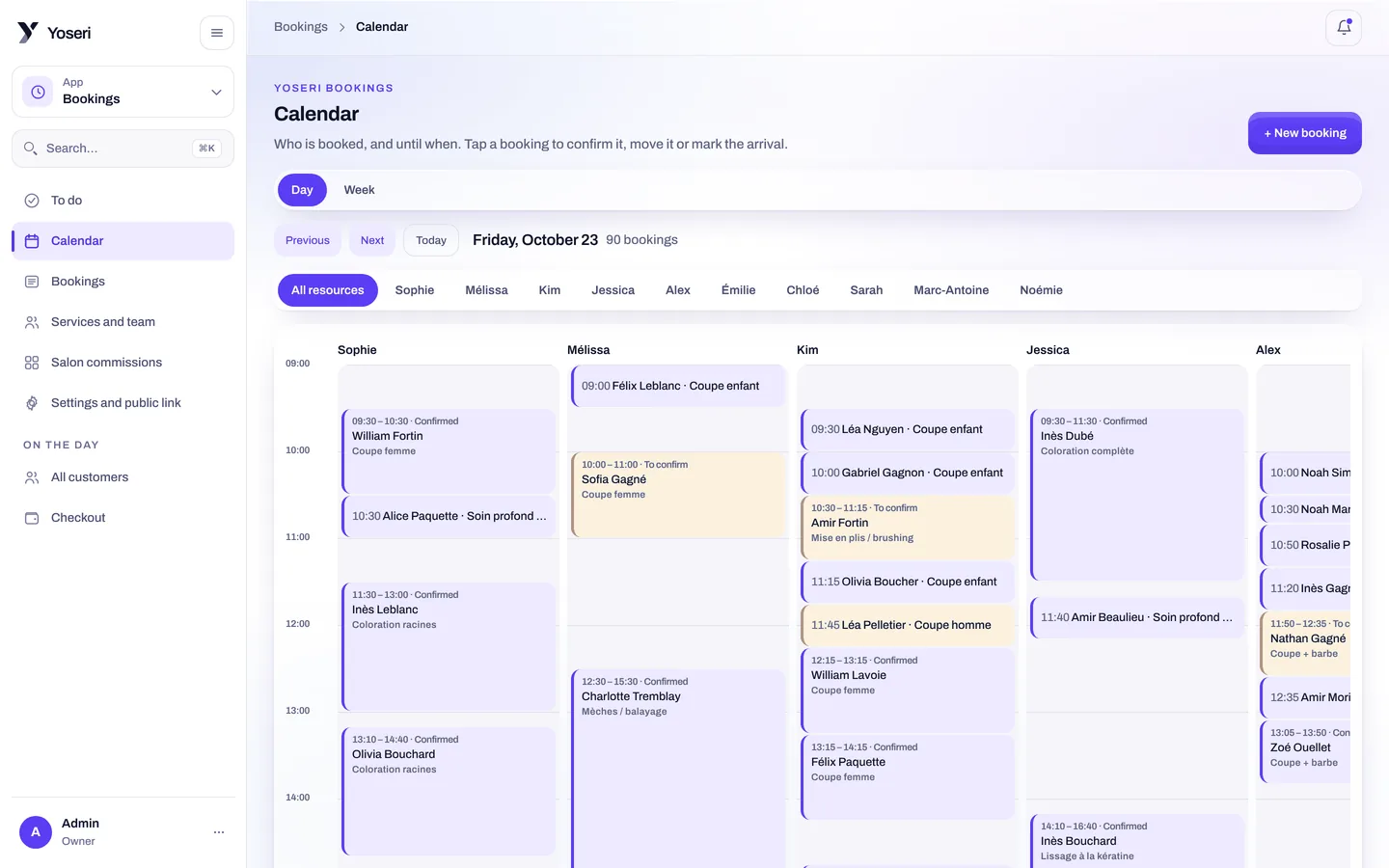
The table plan
Open a table, transfer it, merge two tables, ask for the bill. “Served by” on every ticket.
QR and waitlist
One QR code per table to order from your chair. An on-site waitlist.
Bookings without an account
A public link to book a table by number of covers. Reminders by email or SMS. No customer account.
Tips
Left on the terminal or offered at the register, split prorated by hours, equal shares or by hand.
Every item goes to its station, every temperature to its log.
Kitchen screens route every order line to the right station: grill, cold, bar. Recipe cards give the cost price, the margin and the allergens. HACCP keeps temperatures, cleaning, receiving and cooling.
- HACCP per MAPAQ, FDA or French rules; temperature readings in a PDF log.
- Allergens calculated from sub-recipes, per Health Canada, the European Union or the FDA.
- Lot traceability from receiving to the plate, with cascading recalls. Waste and surplus by reason.
Kitchen screens
One tablet per station, activated by a code, never showing a price.
Temperatures
Fridges, walk-in, cooling: readings and a PDF log.
Recipe cards
Sub-recipes, cost price, margin, allergens.
Printed slip
Epson, Star or ESC/POS, driven by the browser.
The quote accepted online, with no customer account.
The quote goes out by email from the Sales app. The customer accepts it on a tokenized page. It enters the pipeline, then the production of the planned day. Regular trade customers have their discount, their negotiated prices, their delivery and their standing orders.
- Kanban pipeline, contacts, activities, follow-up sequences, sales rep commissions.
- Automatic invoices for trade customers, with the “invoices to send” queue.
From the brew to the bar, and on to the corner grocery.
Microbrewery is one of the industries offered at sign-up. It sells at the bar and to trade customers: bars, restaurants, grocery stores.
Lots and traceability
Every brew is a lot, traced from raw material to sale, with a cascading recall if an ingredient is a problem.
Trade customers
Discount, negotiated prices, delivery, standing orders, automatic invoices.
Stock per site
Bar, warehouse, shop: on-hand and available stock, transfers, stock-out forecast.
Patio, bar, floor: every shift in its section.
Team leads propose the schedule by section, management publishes. Everyone clocks in on the tablet with their PIN, tips are split on clocked hours, and pre-payroll comes out with estimated net pay, per Quebec labour standards.
- Shift swaps offered by servers, approved by the lead, from staff.yoseri.com.
- Opening and closing checklists, signed. A logbook between services.

Chained and tamper-proof, but not a certification.
Every Z close enters a ledger chained by SHA-256, verifiable with a public key, archived and signed every month and every year. It is not a MEV-WEB certification, and in Québec on-site dining requires one.
What exists
Chained Z closes, integrity check, signed archive, register sessions with a float and a variance.
What is missing
Revenu Québec’s MEV-WEB certification for restaurants with on-site dining and for caterers.
What is not covered
Retail, salons, bakeries and take-out cafés.
Questions from restaurateurs
Can I use Yoseri for my restaurant in Québec?
Not yet for on-site dining. In Québec, restaurants, bars and cafés with on-site dining, and caterers, must use a MEV-WEB certified SRS. Yoseri does not have this certification yet. The chained ledger and the Z closes exist, but they do not replace it.
How are tips split?
The tip from the terminal or the register joins the day’s pool, along with off-register tips. Split prorated by clocked hours, equal shares or by hand, with exclusions. Every server sees their own in their employee space.
Do customers have to create an account to book?
No. The public link /reserver/
How does a caterer send a quote?
From the Sales app: the quote goes out by email and the customer accepts it online, on a tokenized page, with no account. It enters the pipeline, then the “for later” orders of the planned day.
What is needed in the kitchen?
One tablet per station for the kitchen screen, or an Epson, Star or ESC/POS printer driven by the browser for the slip. Temperature readings go into a PDF log.
Open the demo bistro, at its real size.
Then create your own: thirty days of trial with every app, no card.