From the bakehouse to the tax return, without re-entering a thing.
The bake suggested on eight weeks of sales, recipes with their cost price, custom cakes with their daily cap, trade customers with their standing orders. Plus the point of sale, scheduling, pay and accounting.
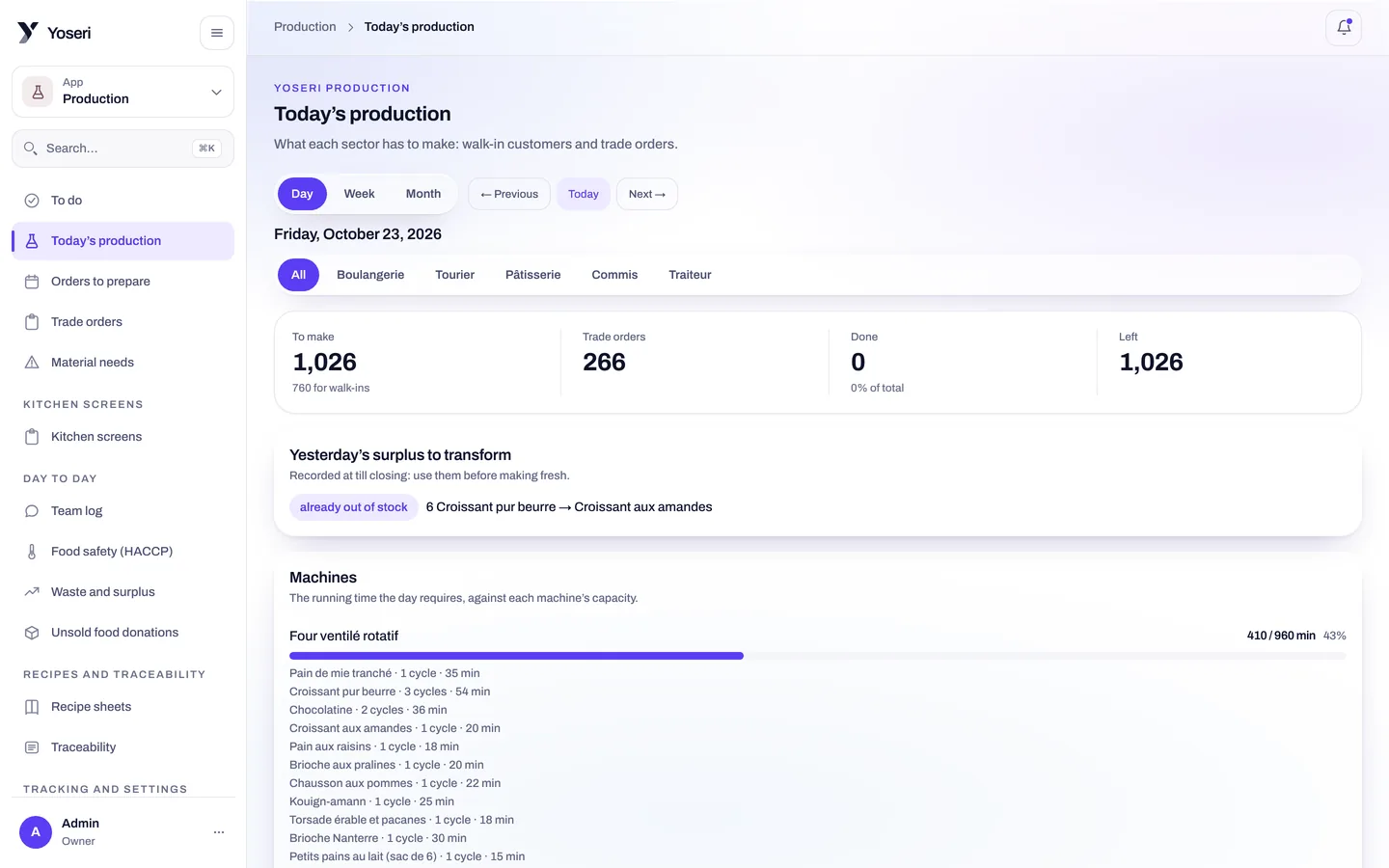
The morning bake, confirmed at the station.
One tablet per section: bakehouse, pastry lab, shop. Everyone sees their day’s production, confirms the bake by signing with a PIN, logs the evening’s waste. No price on screen, no session to open.
- Grids by weekday, suggestion computed on eight weeks, trade and special orders added in.
- Ingredient needs derived from the recipes, with a draft purchase order in one click.
- HACCP: temperatures, cleaning, receiving, cooling, following MAPAQ, FDA or French rules.
- Waste, surplus, donations: unsold goods go to a recipient with a PDF slip and a yearly total.
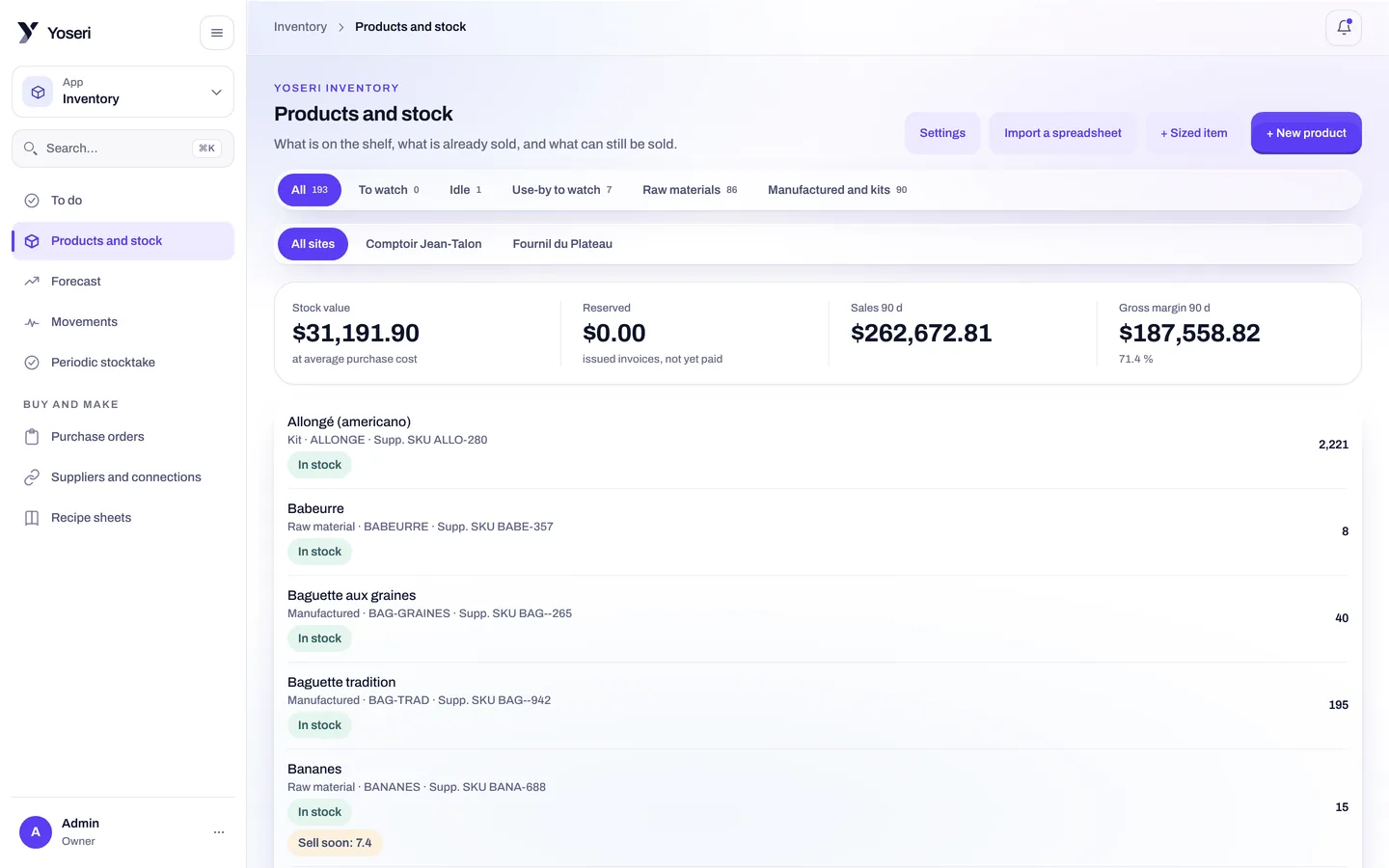
The cost price, sub-recipe by sub-recipe.
A croissant is a dough, a laminating butter and oven time. The recipe sheet adds up the sub-recipes, gives the cost, the margin and the allergens, and tracks the purchase price of every ingredient.
- Lot traceability from the flour received to the bread sold, with cascading recalls.
- Purchase prices come from supplier invoices imported as PDF, photo or CSV.
- The margin is masked for anyone without the “see the numbers” capability.
Margin
Computed per recipe, selling price against an up-to-date cost price.
Cost price
Flour, butter, yeast, salt, eggs: every ingredient at its latest purchase price.
The counter, the Saturday cake, and the café down the street.
The counter register
Product options, tip on the terminal, receipt by SMS, chained Z close. A “café” template in one click for drinks.
See the point of saleCustom cakes and yule logs
A daily cap the customer sees (“32 / 40”), a reference photo, lead times, a deposit and cancellation rules.
See the online pageTrade customers
Cafés, hotels, grocers: discount, negotiated prices, cut-off time, standing orders, automatic invoices.
See trade customersOpen at 6 a.m., schedule published on Thursday.
Team leads propose the schedule, management publishes. PIN clock-in on the tablet, tips split pro rata to hours, pre-payroll with estimated net pay.
- Québec labour rules: rest periods, notice, minors, night premiums, minimum wage, overtime beyond 40 hours, statutory holidays.
- Leave: year starting May 1, 4% or 6%, balances kept by the server.
- Employee space: schedule, pay, tips, documents to read with a “read and understood” acknowledgement.

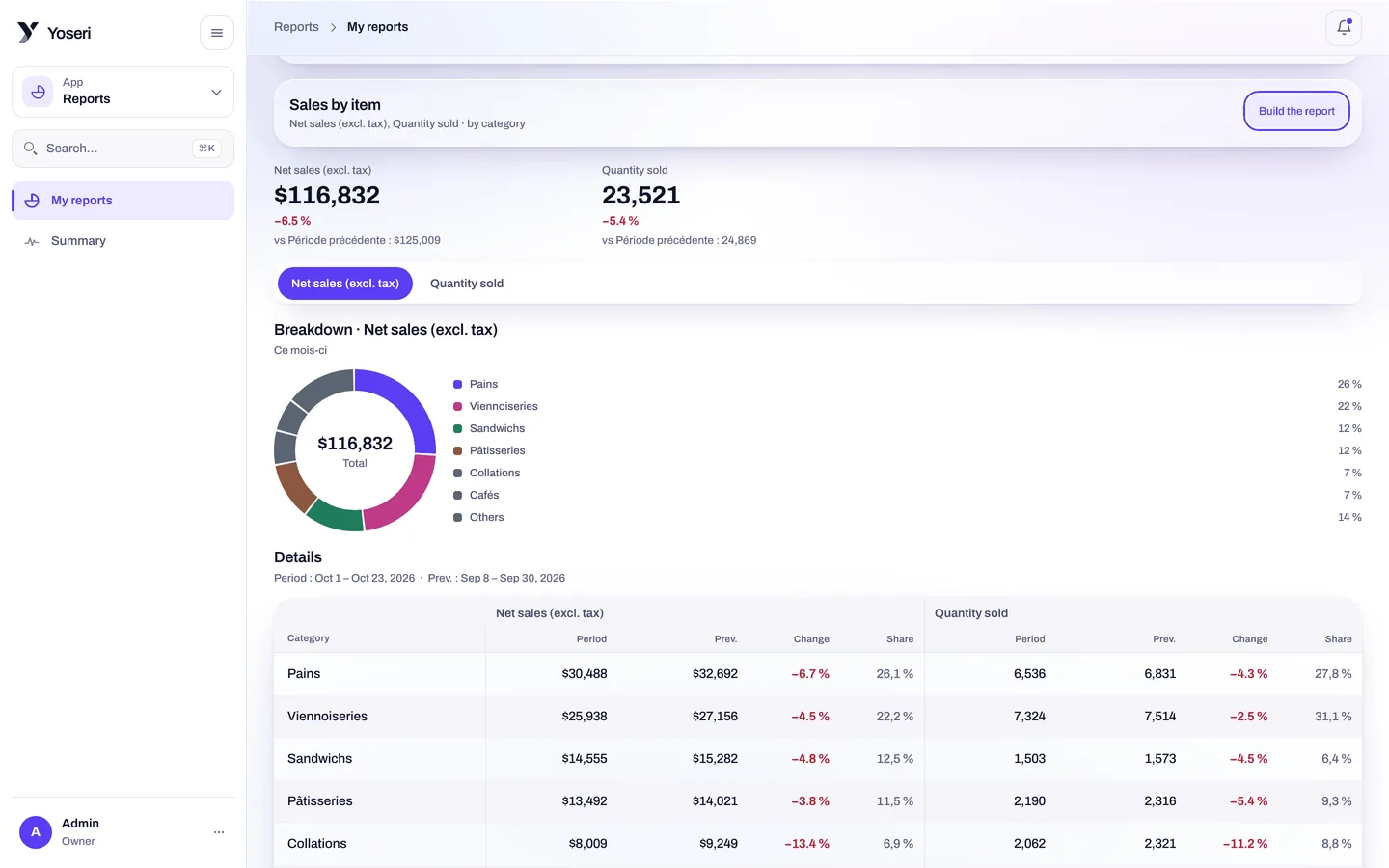
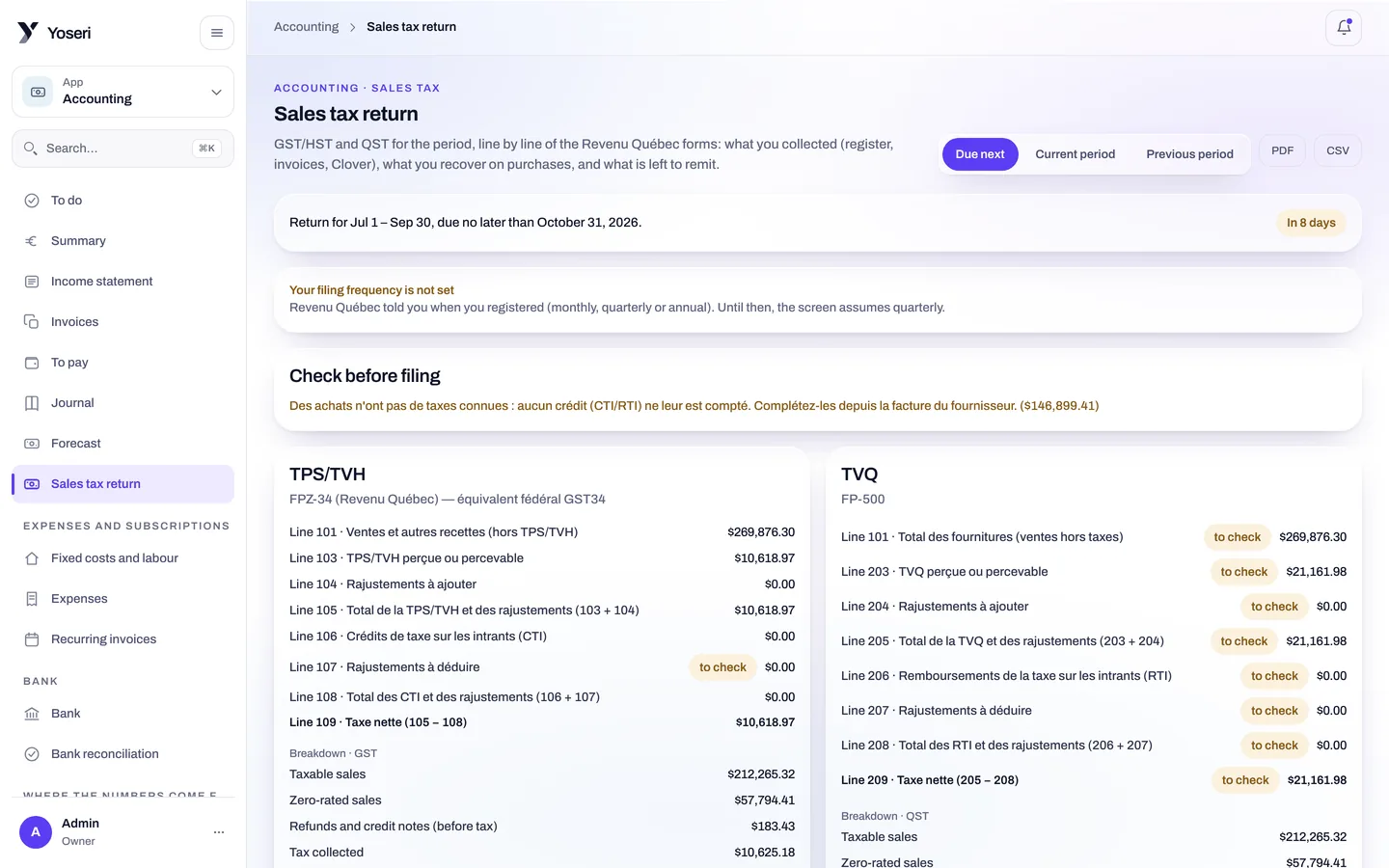
The month’s summary, sent to the accountant.
Sales per shop, top products, waste by reason, hours. The GST and QST return fills in line by line following the Revenu Québec forms, with the export for the accountant.
Questions from bakers
How is the bake suggested?
On eight weeks of sales, by weekday and by product, with the day’s trade orders and orders to prepare added in. The bakehouse confirms the bake on the station tablet, signing with a PIN. The suggestion does not yet read per-product sales from an external register such as Clover, only its daily total.
Allergens and traceability?
Every recipe carries its allergens by jurisdiction (Health Canada, European Union, FDA), computed from its sub-recipes. Lots are traced from receiving to sale, with cascading recalls. Printable regulatory labels are not done yet.
What about trade customers, cafés and hotels?
Each one has its discount, negotiated prices, order cut-off time and standing orders by weekday. Invoices go out automatically. Their orders feed into the day’s production.
Do I need a MEV-WEB certified system?
Not for a bakery selling take-out. The requirement covers restaurants with on-site dining and caterers in Québec. If you run a café with tables, let’s talk first: Yoseri has not obtained MEV-WEB certification yet.
Try the demo bakery, with its fifteen thousand tickets.
Then create your own: thirty days of trial with every app, no card.